

1.
As with everyone, her face assumed an affected, unnatural, ugly expression as soon as she looked in the looking glass. — War and Peace, 1869
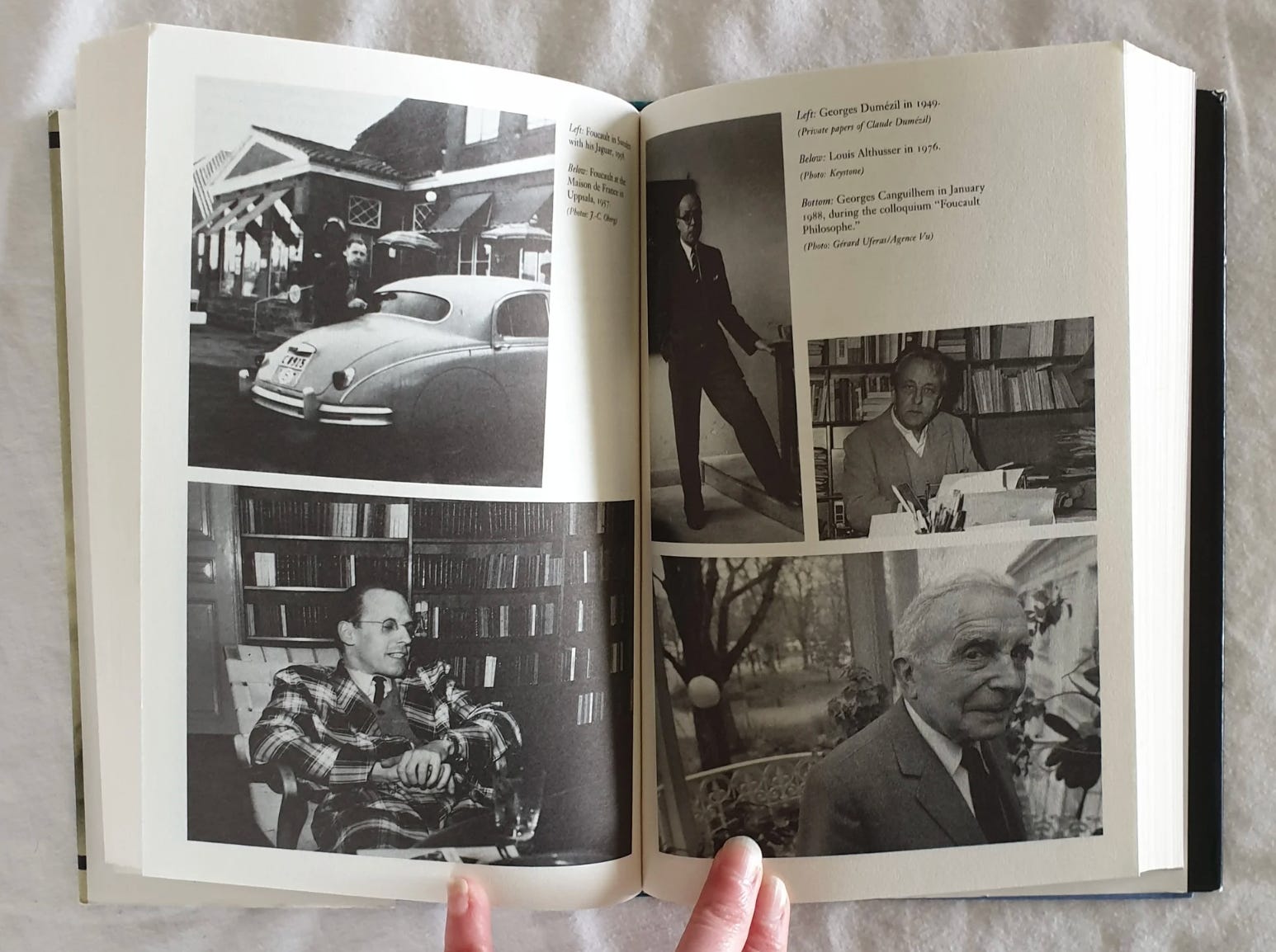
Michel Foucault was convinced he was ugly, which is why he hated nature almost as much as he hated mirrors—or so he had said drunkenly last night in the jardin du Luxembourg, before tottering to his feet, pissing into his reflection in the Grand Basin, and turning his back on the sunset.
“Arrogant normalien snob,” his brother Denys had called him. Roland Barthes, who never sat the ENS exam and failed the agrégation, took two quick puffs on his braided figurado, thought about the tuberculosis that all those years before had crumbled the upper part of his left lung, and said nothing.
“I love the sun,” said Michel.
2.
He frowned, trying to appear as if he did not want any of that wine, but was mortified because no one would understand that it was not to quench his thirst or from greediness that he wanted it, but simply from a conscientious desire for knowledge. — War and Peace, 1869
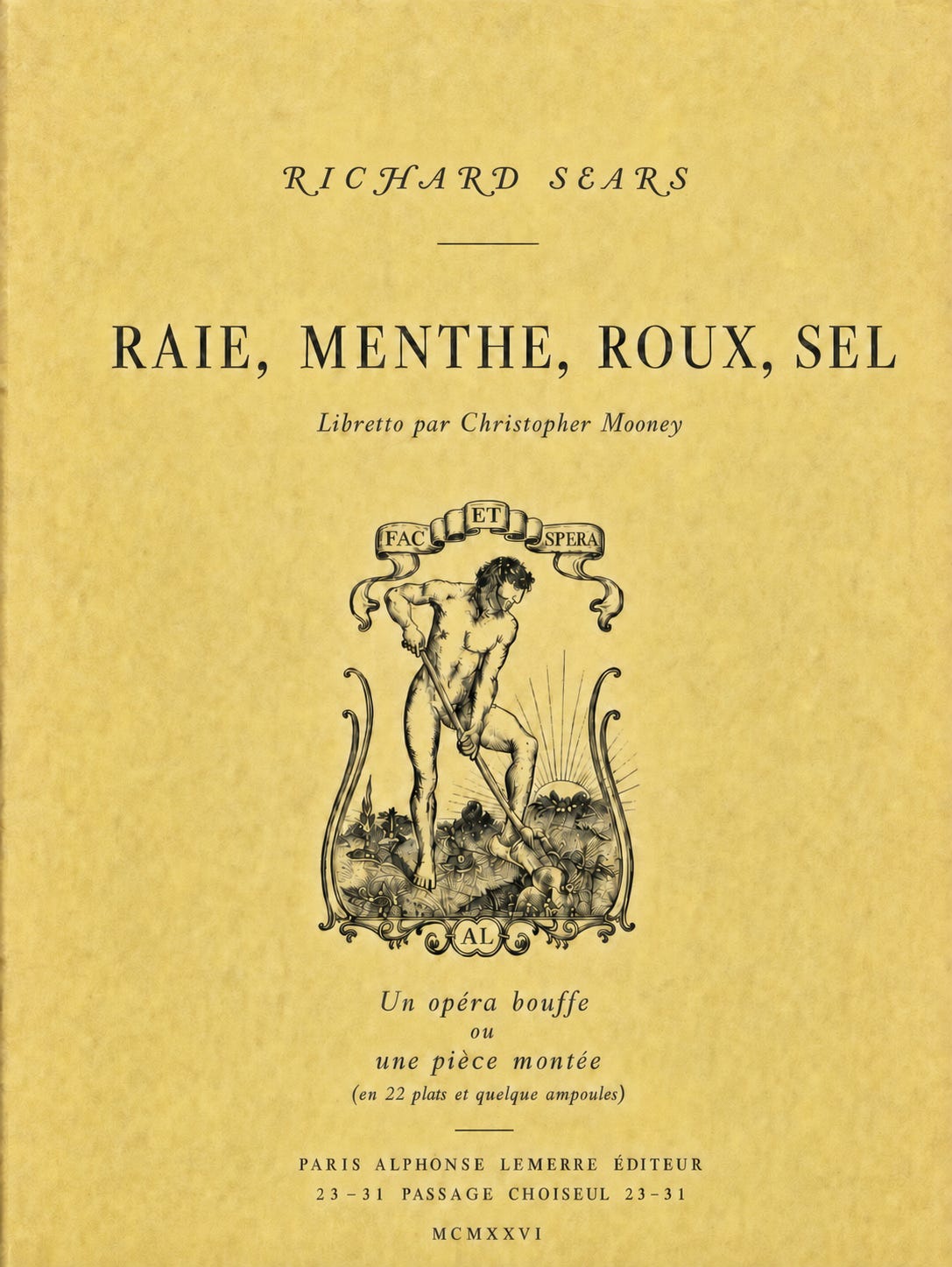
I am writing this because, after many years of stops and starts, I have at last completed the libretto for an opera about the “last supper” of the French writer Raymond Roussel (1877–1933).
Richard Sears is the composer. Thomas Landbo and Sarajeanne Drillaud sing the principal roles. Performances, inshallah, are planned for Paris and Brooklyn.
3.
Because of the self‑confidence with which he had spoken, no one could tell whether what he said was very clever or very stupid.— War and Peace, 1869
Twenty‑four hours earlier, Michel and the physicist Jacques Papet-Lépine were in Michel’s new Jaguar, on the last day of a two-day road trip from Sweden to Paris. They had stopped the night before in Strasbourg for dinner with one of Michel’s former students. Seven young men at the table. Plenty of wine. Hashish. Cocaine. After, they went to a nightclub, where he had sex in a Turkish toilet and blacked out.
Jacques drove the rest of the way to Paris the next day while Michel slept. It was the hottest summer on record. The day before they started, back in Uppsala, Jacques had defended his thesis (“A Mathematical Contribution to the Theory of Thunderbolts” (coup de foudre, which also means “love at first sight”). He was heading home to Perros-Guirec to celebrate. Michel wanted to go with him, but his father was ill; he and Denys were driving to Poitiers that evening with their sister Francine. This morning, however, Michel, alone—he was staying with Denys on rue Monge—had walked back to the garden, and he was right now reading Le Monde in a green metal armchair he had dragged out of a shaded allée behind the Médicis fountain to place fully in the blazing light.
He craved heat.
4.
It seems to me rather useless to spend time reading what is unintelligible and can therefore bear no fruit. — War and Peace, 1869
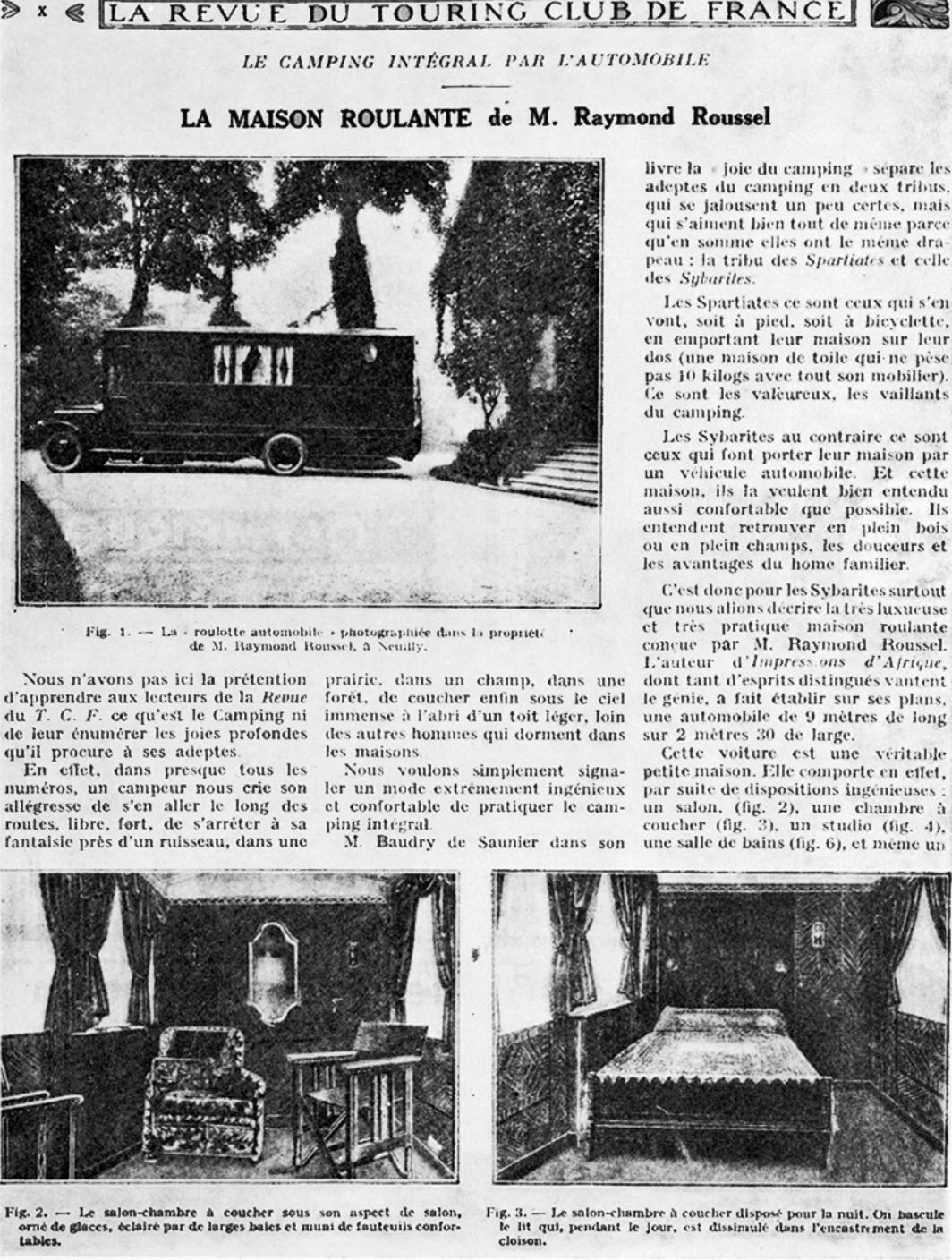
Raymond Roussel is one of the great oddballs of French literature. Absurdly wealthy, he traveled the globe, writing wherever he went, but rarely leaving his luxury-liner cabins and hotel suites.
In his custom-designed roulotte, below, the world’s first camping car, he visited most of Europe and parts of Asia, but “toujours avec les volets fermés” (“always with the blinds drawn”).
From his posthumous Comment j’ai écrit certains de mes livres (“How I Wrote Certain of My Books”): “Yet from all these travels, I never drew anything for my books. It seemed to me worth pointing out, as it shows that for me, imagination is everything.”
5.
If the man whose actions we are considering is on a very low stage of mental development, like a child, a madman, or a simpleton—then, knowing the causes of the act and the simplicity of the character and intelligence in question, we see so large an element of necessity and so little freewill that as soon as we know the cause prompting the action we can foretell the result. — War and Peace, 1869
The front-page stories Michel skimmed through in Le Monde that morning—the Battle of Algiers and Israel’s withdrawal from Gaza—had been scraped clean by the censors of the Quai d’Orsay.
Below the fold, too. Venezuela’s military junta. Papa Doc’s election in Haiti. US troops in Little Rock. The death of Joe McCarthy.
He flipped to the cultural section. He was not interested in politics. He was not paying attention to the war. Except for a newfound taste for le vice anglais, torture had yet to register in his body as a structured form of experience. He was thirty years old. He had failed the ENS concours almost half a life ago, the year he first tried to kill himself, but passed it easily the following year. By 1957, the year we are now in, he held degrees in philosophy and psychopathology, had passed the agrégation, taught in Lille, worked as a psychologist on the locked wards at Hôpital Sainte-Anne and in Fresnes prison, and had started writing about madness.
In 1955, two years before, he had left France for Uppsala, where he was a French assistant in the Department of Romance Studies. He also worked directly for the Quai d’Orsay as a cultural attaché in Stockholm and as director of the Maison française in Uppsala. His lecture topics ranged from love in de Sade and Genet to religious experience from Chateaubriand to Bernanos, and mania in Racine’s Andromaque. The only questions that followed his lectures came from students he had planted in the audience.
The Maison was a large flat on the top floor of a building on Sankt Johannes Street. He made a pasta dinner there for Maurice Chevalier, and held apéros for Marguerite Duras and Jean Hyppolite. Barthes came and read something; neither he nor Michel could later remember what it was about (wrestling, Abbé Pierre, Garbo’s face?). Mythologies, which collected these essays, will be published in September.
Barthes’s politics at the time were slippered and pyjamaed anti‑capitalism. He exposed “myths” and dissected bourgeois ideology, but it did not call for organised political struggle. He loathed the “committed literature” championed by Sartre. He liked steak‑frites and ice cream and lived with his mother, who had no idea he was homosexual.
Michel, on the other hand. He considered himself more a Nietzschean than a communist, or maybe something a Freudian, or Binswangerian, or a Freudo‑Bingswanger-Marxist Nietzschean—whatever that might look like—and he also thought de Gaulle had “his head on straight” (“Il avait la tête sur les épaules”).
6.
Here, as elsewhere, he was surrounded by an atmosphere of subservience to his wealth, and being in the habit of lording it over these people, he treated them with absent-minded contempt. — War and Peace, 1869
Roussel’s Neuilly estate kept a staff of 16, even in the leanest years of the late 1920s: chef, maître d’hôtel, governess, two footmen, washerwoman, three gardeners, three cooks, valet de chambre, and three chauffeurs—one for each Rolls-Royce. Two of the cars shuttled produce daily from his estate in the Alpes-Maritimes to Neuilly, sometimes carrying nothing more than a box of raspberries.
While staying at the Ritz through 1928, he sent 25 handkerchiefs a week to the laundry.
It is said that he never wore the same collar, cuffs, underwear, or socks twice.
By the time of his suicide in 1933, he had spent every cent of his fortune—thought to have been in excess of three billion francs—on his self-published Editions Lemerre books, lavish theatrical productions, barbiturates, and blackmail payments.
7.
A personal, human feeling for a brief moment got the better of the artificial phantasm of life he had served so long. — War and Peace, 1869
Though he had joined the Party a few years earlier, Michel’s sexual orientation had kept him well out of its core sphere. The values of the ultraconservative apparatchiks in the PCF were family-first bourgeois. They hated queers. Jacques Duclos, when asked whether the French Communist Party had revised its stance on “so‑called sexual perversions”, said homosexuals should “go and see a doctor” and that “French women are healthy, the PCF is healthy; men were made to love women.” Worst still were their realist, “engaged” aesthetics. They distrusted Michel’s beloved nouveau roman and théâtre de l’absurde. They thought that with En attendant Godot, Beckett had turned his back on history and class struggle.
Michel was still then a dandy. With particular tastes. The boot of the Jaguar contained a Louis Vuitton bag filled with black leather, whips, handcuffs, and chains. What, Denys and Francine asked him in the car, did he know about love, madness, and power? On the phone that morning, his father had said that, as a small boy, he had once told his mother—Michel’s grandmother—that he wanted to be a goldfish. “But you hate cold water,” his mother had said. “Yes,” said his father, “but I still want to be a fish. I want to try it for a while, see what it feels like.”
In the afternoon, he would visit a bookstore or two and then, after lunch, go on to the library.
Plus ça. Change.

On a sunny September afternoon in 2018, a friend and I went to another friend’s newly opened bookshop, The Red Wheelbarrow, on Rue de Médicis, across the street from the senatorial section of the Jardin Luxembourg.
8.
I value this mystic power and glory that is right here, above me, floating in this mist! — War and Peace, 1869
Much of Roussel’s adult life was marked by severe neuroses, thought to be linked to the spectacular failure of his first published work, La Doublure (1897), a long novel in alexandrines written over several months during which he experienced what he called “a sensation of universal glory of extraordinary intensity”.
I was carrying the sun within myself and could do nothing to impede the tremendous light I was radiating… What I was writing was surrounded by rays. I would close the curtains because I was afraid that the slightest crack might let outside the beams of light coming from my pen. I wanted to remove the screen all at once and illuminate the world. If those pages were left lying around, they would send out rays of light all the way to China, and the frantic crowd would come crashing down upon the house.
When La Doublure met with complete silence – no frantic crowds, no recognition in the street, no reviews – the ego collapse was devastating: “I had the impression of having been hurled to the ground from the summit of a prodigious glory.”
Still, he held on to his convictions of grandeur:
“I shall rise to immense heights, and I was born for a dazzling glory. It may take time, but I shall have a glory greater than that of Victor Hugo or Napoleon… There is in me an immense glory in potential, like in a tremendous shell that has not yet exploded… This glory will bear on all my works without exception; it will reflect back on every act of my life; people will go back and seek out every act of my childhood and admire the way I played tag… No author has been or can be superior to me; people do not yet see it today: some shells are slow to explode—but when they do!… Some are predestined! As the poet says: ‘and then one feels a burning on one’s brow… The star one wears on one’s brow, resplendent.’ Yes, once I felt that I had the star upon my brow, and I shall never forget it.”
He underwent treatment with Pierre Janet, the French psychologist (and normalien) who coined the terms dissociation and subconscious. Failing to recognize any literary gift in Roussel, Janet dismissed him as ‘un pauvre petit malade.’
9.
When one’s head is gone, one doesn’t weep over one’s hair! — War and Peace, 1869
Jacques Martin, a Germanist at the ENS four years older than Michel, was considered the most brilliant member of his generation. Althusser was in awe of his intellect. Merleau-Ponty called him “the Prince of the Mind.”
After the war, he could not comprehend how anyone could study German philosophy in the wake of Auschwitz—yet he continued to pore over the works of Kant, Hegel, and Marx. The contradiction sent him into a profound depression. He failed the agrégation twice: first in 1948, then again in 1950.
In 1963, near the simultaneous publication of Michel’s first two books, Raymond Roussel (English title: Death and the Labyrinth) and La Naissance de la clinique (The Birth of the Clinic), Martin committed suicide.
None of his writings survives.
For Michel, who defined madness as “l’absence d’œuvre,” Martin was his first “ghost of failure”—a warning of what he could become.
He would, in a few minutes, just across the street from the garden, find another.
10.
I don’t know what happens next, I can’t possibly know… but I would give them all up for one moment of glory, triumph over men, to be loved by men I don’t even know. — War and Peace, 1869
Roussel’s daily routine was as eccentric as his writing: he consumed all four meals—breakfast, lunch, dinner, and souper—consecutively from 12:30 to 5:30 PM, working his way through twenty-two dishes in a single five-hour session to free the remainder of the day for writing.
We will be recreating this 1926 meal, adapted by the Hanzhou Piao.
11.
We can know only that we know nothing. — War and Peace, 1869
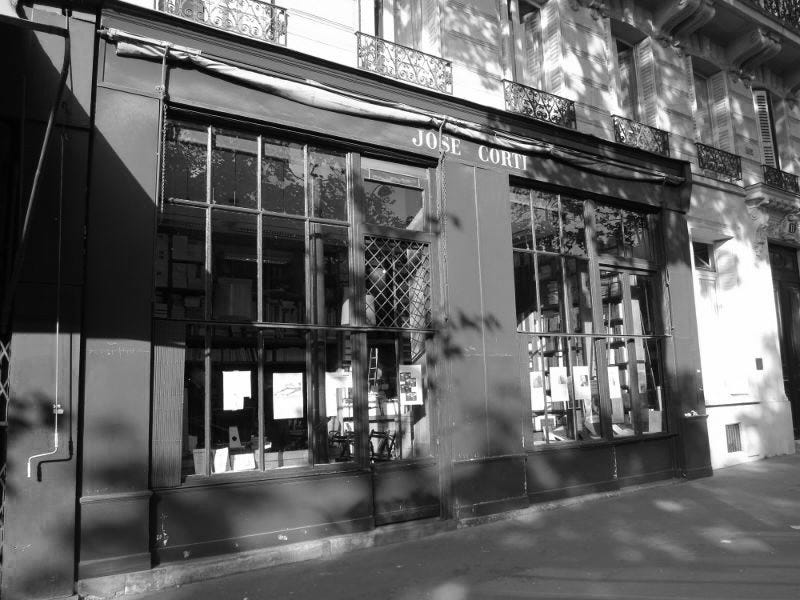
Michel left the Jardin du Luxembourg, crossed the rue de Médicis, and went into the bookshop opposite the garden. He couldn’t remember what book he was looking for.
José Corti, an elegant older man, was seated behind his large, book-covered desk, talking with a friend. Michel waited quietly. Corti was not the kind of bookseller that you could interrupt with a “Could you find me such and such a book?”
There was a crucifix above the desk. Michel knew why. François Le Lionnais (who, along with Raymond Queneau, founded Oulipo) had carelessly run Resistance operations out of Corti’s shop without telling him, drawing the Gestapo’s attention. In 1944, Corti’s wife had been arrested and sent to the camps. She’d survived. Their nineteen-year-old son had been taken too, interned at Fresnes, then deported. He never came back. After the war, Corti had nearly stabbed Le Lionnais but had let him live. He and his wife converted to Catholicism.
As he waited, Michel noticed a row of volumes with old‑fashioned covers prominently displayed on a shelf near the desk. They looked like the books Parisian publishing houses printed at the end of the nineteenth century. The fleuron and name were stamped in gilt on the yellowish spine: Librairie Lemerre. Curious about what Corti was still selling from this forgotten stock, he took one down—and so, by accident, opened a book by a writer whose name he had never heard.
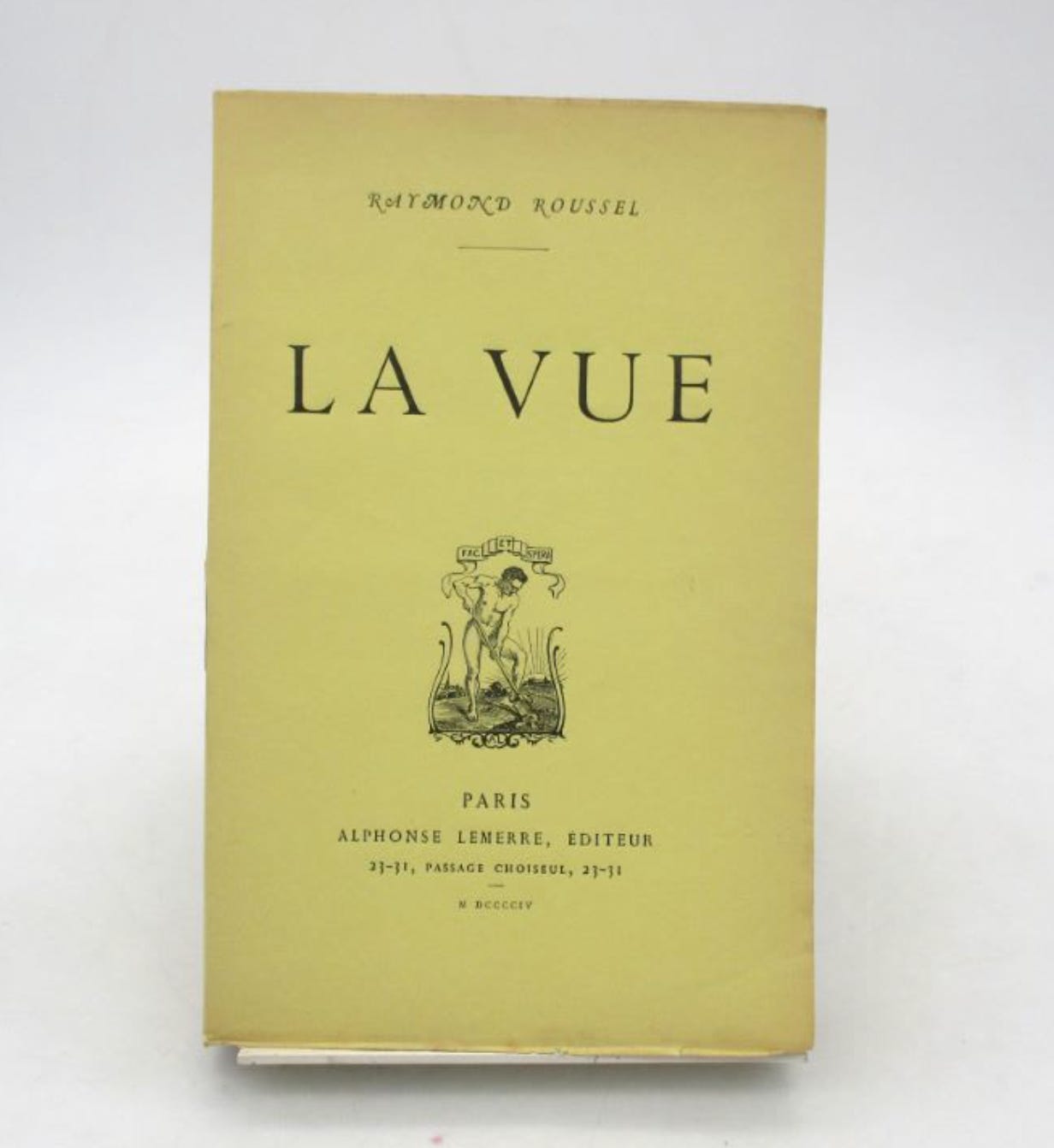
Sometimes a momentary reflection lights up
In the view encased at the bottom of the penholder
Against which my wide-open eye is pressed
At very close range, barely withdrawn;
The view is placed in a glass sphere
Small and yet visible, which encloses
At the top, almost at the tip of the white penholder,
where the red ink has made stains, like blood.
The view is a very fine photograph,
imperceptible, no doubt, if one judges
by the size of its glass,
one side of which is frosted on the reverse;
But everything swells when the more curious eye approaches
close enough for an eyelash to catch on it at times.
I hold the penholder fairly horizontally
with three fingers by its metal frame,
which gives me a cool sensation at the touch;
my left eye, completely closed, prevents me
from being preoccupied elsewhere, from being distracted
by another spectacle or other attraction
occurring outside and seen through the
half-open window before me.
From the very first line, Michel was struck by the beautiful strangeness of the writing, disconcertingly close to Alain Robbe-Grillet’s, which he had been reading in Sweden, but written a half-century before. Michel could make out an affinity between La Vue and Robbe-Grillet’s work in general, and Le Voyeur in particular.
When Corti finished his conversation, Michel, still shy, asked who this Roussel was. Corti looked at him with a cool, almost amused air of condescension—“Mais enfin, Roussel…”—and Michel instantly understood that he ought already to have known the name.
12.
I don’t know what will happen and don’t want to know, and can’t, but if I want this—want glory, want to be known to men, want to be loved by them, it is not my fault that I want it and want nothing but that and live only for that. Yes, for that alone!” —War and Peace, 1869
Roussel’s “procédé”—a compositional method based largely on punning phrase-pairs—produced some of the strangest literary works since those of Rabelais. They overflow with baroque machines and endlessly layered descriptions generated by language rather than by lived experience. Foucault: “He takes phrases that are quite everyday, heard by chance, taken from a song, read on a wall. And with these elements, he constructs things that are the most absurd, the most improbable, without any possible relation to reality.”
Though he remains obscure—I have encountered only a handful of French literary types who has even heard of him, and not one who has actually read him—his work exerted a decisive influence on André Gide, André Breton, Jean Cocteau, and the Surrealists, Marcel Duchamp and the avant-garde of contemporary art, writers like Queneau, George Perec and other Oulipians, and the poet John Ashbery.
Even readers who don’t know the method exists feel it. They sense they are reading ciphered text. Foucault: “There is a quality of imagination that means that even without knowing that there is a procedure, the work stands on its own. But the awareness of the procedure instills in the reader a sense of uncertainty, even if he knows he will never be able to recover it, even if he simply takes pleasure in reading the text. The fact that there is a secret, the feeling of reading a kind of ciphered text, turns reading into a game, an undertaking certainly a bit more complex, a bit more unsettling, almost a bit more anxious than when one reads a text for pure pleasure.”
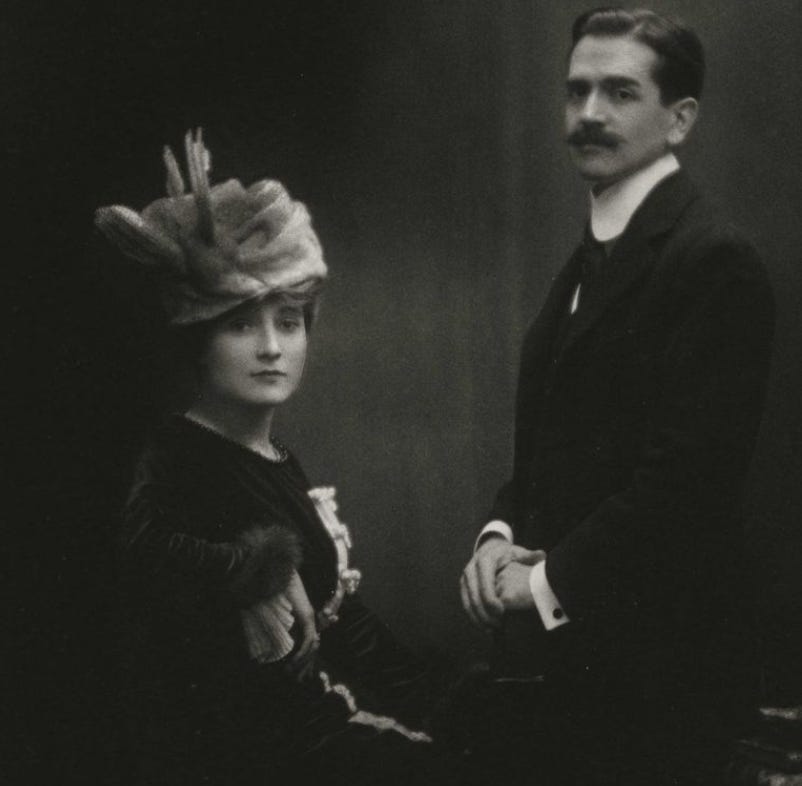
Charlotte Dufrêne (Sarajeanne Drillaud) served as Roussel’s “beard”—a fake mistress chosen by his even more eccentric mother to conceal his homosexuality. Among her duties: attending plays and operas with him every night. He would first ask her to go two or three times beforehand and bring him the programs, and only then would he come with her, in a state of terrible anxiety: “and afterward, for twenty, thirty, fifty nights in a row, I am not exaggerating, I swear to you, the same play, the same seat.”
Foucault thought the cryptography of Roussel’s method—the “hiding”—was linked to his sexuality. “It is because he is homosexual that he hid his sexuality in his work, or it is because he hid his sexuality in his life that he also hid it in his work.” He considered three examples: Cocteau displayed his homosexuality ostentatiously. Proust both hid and revealed it, withdrawing insistently while letting it show through. Roussel concealed it entirely. And yet all three “strategies” could be explained identically: “It is no surprise he did this, since he is homosexual.” Hiding entirely, hiding by showing, or displaying—all equally consequences of what one might call a way of living, a choice in relation to what one was as a sexual being and as a writer.
Foucault: “I believe it is better to try to conceive that, in the end, a writer does not simply produce his work in his books, in what he publishes, and that his main work is finally himself writing his books. And it is this relation of himself to his books, of his life to his books, that is the central point, the focal point of his activity and his work. An individual’s private life, his sexual choices, and his work are linked not because the work translates his sexual life, but because it includes life as much as text.”
Foucault famously wrote about the death of the author, but of Roussel he wrote, “The work is more than the work: the subject who writes is part of the work.”
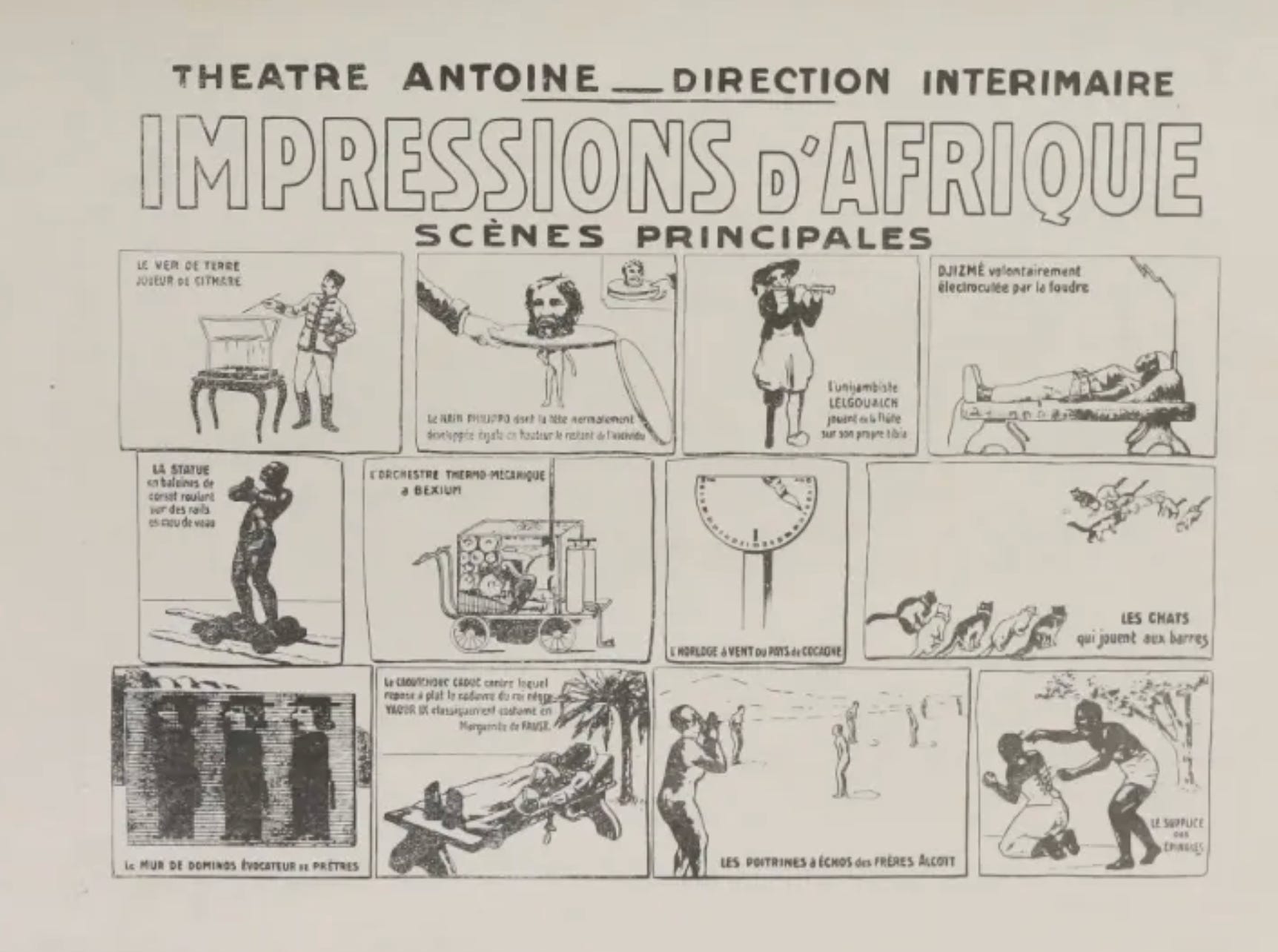
Some of Roussel’s weirdest creations included: grapes that ripen instantly and unfold interior scenes from the Gospel of St. Luke and Rousseau’s Émile; Danton’s severed head, reanimated; and, in Locus Solus, refrigerated corpses reliving significant moments with their grieving loved ones.
More are listed in the poster below, for his 1912 production of Impressions d’Afrique. The play’s title is probably a play on Impressions de Fric (Impressions of Cash).
The pun plays on impressions: Roussel’s African voyage three years earlier had been a luxury-liner trip in which his wealth (fric) meant he never had to leave his suite, and his imagination meant he never had to see anything.
A similar story is told of Roussel’s even more eccentric mother (also Sarajeanne Drillaud), who, legend has it, took a large entourage (and her coffin, which she always traveled with) aboard her yacht to “see” India. When the captain announced that the Indian coastline was in sight, she took one look and ordered the boat to turn around and return to France.
The scenography of Raie, Menthe, Roux, Sel reproduces one of the more famous elements from Impressions of Africa: a Spartan slave statue that crosses the stage on rails made of calf lungs.
Like all of his plays, Impressions of Africa cost a fortune and flopped. There were riots during all three performances.
We hope Raie, Menthe, Roux, Sel will fare better.
My dear friend. Could it be possible that you have confused deaths and lives? For it was Barthes who famously wrote The Death... and Foucault who then - two years later - questioned the assumption. Sending with much fondness.
Where and when will the dinner be held? And will you serve it out of a caravan?!?!?