
THE BOWER OF POWER
Apologies to Edmund Spenser and the Excited Snakes of America

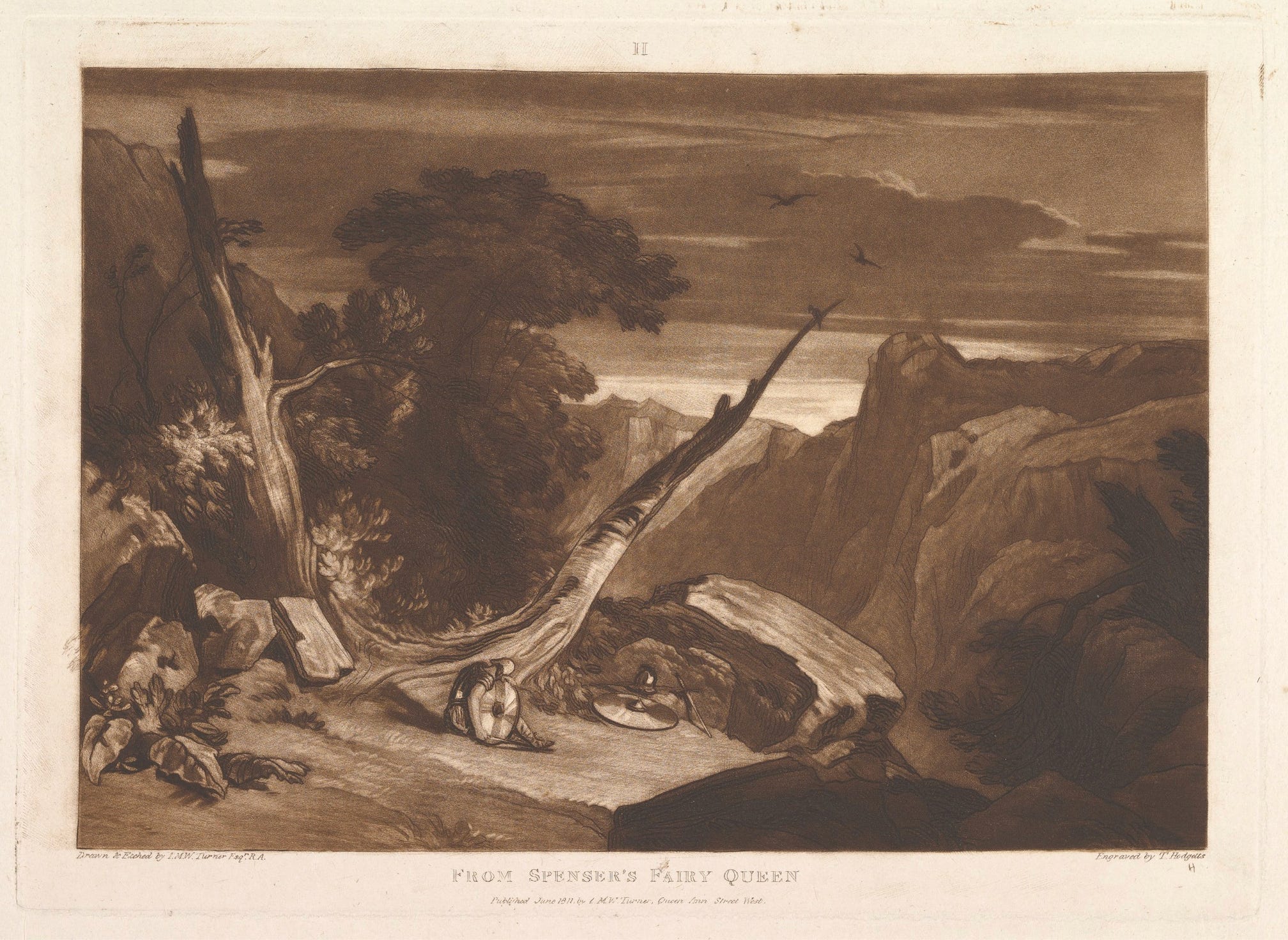
See the mind of beastly man,
That hath so soone forgot the excellence
Of his creation, when he life began,
That now he chooseth with vile difference,
To be a beast, and lacke intelligence.
– Edmund Spenser (1590), The Fairie Queene, Book II, Canto XII, Stanza 87, Lines 1-5.
The brief was clear: trample the pleasure gardens, burn the goddawful ballroom to the ground, seize the sorcerer, bind him in unbreakable chains, free the souls lost to his spells and restore those he turned to beast to something resembling human form.
Carrying out these tasks, however, would prove harder than any labour ever faced by Hercules.
And our Hero (hereinafter “H”), was hardly Hercules, though he had tried ably to prepare himself for every conceivable danger, and to arm himself accordingly, with all manner of weapons, attachments, character skins and perks – the full customised loadout – but this elaborate provision now embarrassed him, for the spot itself, once H. found himself on the very threshold of passing through its portal, was indescribably lovely; everything about it pleased his senses, and he felt transported, as if some inner instrument, long out of tune, had been brought suddenly into perfect key, even as every aspect of his being and the entire, unbroken horizon-line from his past to future seemed poised to sink into mute oblivion.
The rainbow colours, the gilded trims, the twinkling lights, the interlacing boughs and branches, the murmuring crystal streams – everything was so cunningly staged and phased that it was impossible to tell what was art and what nature, but even more uncanny were the people, beautiful, sweet-voiced, so easy in their bodies and lively in their conversation. The posted food, especially, looked amazing, as did the wine and cocktails, and the funny cats, and the terrible accidents, and the perfectly prowessed moments with balls, raquets and fists, and the occasional solemn, too-bright face declaring, beneath it all, that this was how victory looked.
It was not simply that H. wanted to be among them. He wanted to enter the whole contrivance, to pass through the screen as through a painted arras and find, on the other side, that the colours were warmer, the streams colder, the voices nearer, the food fragrant and actual. The longer he looked, the more the spectacle ceased to remain at a courteous distance. It pressed forward. It solicited him. It worked upon the body before the mind could defend itself.
His brain raced, his viscera rumbled, his windpipes felt parched. Had he somehow become not just hungry and thirsty but Hunger and Thirst? Had he transcended the primal appetites and become the veritable form of Consciousness and Bliss? The frantic urgings of the mortal frame had somehow become the very fuel for a higher music – a divine longing that the spot’s indescribable loveliness seemed not to satisfy, but to echo back to him from every shimmering dot and pel. He could not remember the last time he had experienced such metaphysiological need, or felt more alive (or more dead!), or more transcendent, transfigured into insatiable desire and insignificant and, what’s more, ridiculous in his appearance; for everyone he saw was dressed in wide-cut Japanese trousers and vintage t-shirts, and he was wearing, well, whatever.
Still, he longed to enter, but at the same time, he was afraid to take another step, for he didn’t know a single soul, and all before him – “people” seemed too commonplace a term for such creatures – were by far the most astonishing he had ever laid eyes on, first among them the tall woman with wildflowers woven into her pleated hair, making soft eyes at him just inside the gate, as if she had been waiting for him personally, as if everyone was expected, welcomed, counted, appraised.
“Spritz or Negroni?” she asked, holding out a glass in each hand. Without thinking, H. reached for the one in her left, which contained a darker orange liquid than the one in her right, and as he did so he mumbled a half-formed “Don’t mind if –” then stopped, remembering the warnings he’d received, how all who travel to this accursed place lose sight of everything decent and noble, and think only of amusing themselves, flattering themselves, ranking themselves among the winners – and his hand almost of its own accord veered away like Bruce Lee’s or Jacky Chan’s or like a tiny catbird’s wings twisting mid‑flight to slip the beak of a pursuing crow, and as he waved away the cursed cocktail “more swift, then swallow shears the liquid sky”, he stumbled forward, knocking the glass from the false enchantress’s right hand into the less ambered glass held in her left hand; they fell onto the tray, toppling at least a dozen more; the contents sluiced over the shaded floor of the bower’s beflowered floor and across the woman’s pristine-as-snow shoes, which he thought were Stan Smiths, but now saw were in fact custom bespoke Nikes By You.
Ignoring the sham siren’s hellcat shrieks, he pushed forward through the gate, and the music changed, and in the arbour before him sat a well-dressed man in resort linen and immaculate white shoes. Upon his head, he wore a red cap, peaked like the beak of some ill-bred bird, and blazoned across the brow with white letters of barbarous confidence. Cheaply made, yet carried as a crown, it sat upon him with the strange authority of a thing both ridiculous and fatal.
In his left hand, he held a soft, transparent bottle, which he squeezed until a stream of Mike’s Hot Honey poured onto the slice of soppressata pizza he held in his right hand.
“Hellboy?” he said.
It was his custom, nay, duty, to give a slice of this infernalized pie to every stranger who passed, but when he offered it to our Hero to taste, H. took it out of his hand and flung it like a ninja star past his head, knocking the red cap into the dust, where its bright white lettering was briefly obscured by honey, ash, and sand, before the slice flew onward into the far-off sea (for this, I should have mentioned, was a wandering island, adrift in the Perilous Gulf).
The Pizza Man was furious, but had no choice except to let H. pass, and he walked on, indifferent to his anger.
Then, before H.’s eyes, a virtual paradise unfolded, overflowing with every kind of delight, and punctuated by advertisements. H. felt known, seen, loved. A quiet law seemed to govern him, just as it did every shade and fountain, though now and then the law flickered and revealed itself as a contract. He felt a tendency in his soul to rid itself of strain, or at least to hold that inner pressure at a soft, bearable level. Slow, sphinctered thoughts inched out of his hoggish mind: what seemed at first like simple delight was, under the surface, his mind’s effort to sink back into stillness, reflecting that deeper drive in all living things to slip toward the calm of the inanimate world. The greatest pleasures on offer here – food, drink, sex, applause, the little red hearts swelling in number beside one’s name – arrived as a brief, bright peace: a sudden extinguishing of a mounting agitation that the place itself had carefully stoked.
Before that final stilling, though, he knew he needed to undertake a preparatory work, to bind and organise the raw impulses aroused, so that their restless energy could be steered toward a single moment of release and the temporary illusion of perfect ease.
Only then did he see the lizards gathered in the inner circle around the Orange King.
END OF PART ONE
✔️